
I used to be obsessed with preheader text, which we used to call ‘snippets.’ Not “watching Love Island USA every night with popcorn” obsessed—but close. I even wrote a blog post on it back in the day.
That was then. These days I still pay attention to preheaders (I’d be committing email malpractice if I didn’t), but I’m no longer obsessed.
Or… maybe I should be.
A recent A/B test I ran delivered a 95.6% increase in revenue-per-email (RPE)—yes, nearly double the control. And all we changed was the preheader text.
No change to subject line. No change to creative. No change to list segmentation, send time, or offer.
Just the snippet. And it made a significant difference.
Let’s unpack how we got there—and how you can do the same.
First, What Is Preheader Text?
Quick refresher: preheader text (also called a snippet or autopreview) is the line of copy that shows up next to or below the subject line in most inboxes.
It’s that valuable “real estate” alongside the friendly from name and subject line in the inbox view. And it’s usually the most neglected.
Here are some examples of the inbox view of an email from Monumental Sport Network, from a variety of email clients. In each, the subject line is bold, while the preheader text is after or below it in non-bold text:

In this example, Monumental Sports Network does a good job at using its preheader text. But too often, marketers either ignore it or waste it with placeholder copy like “View this email in your browser.” (Sigh.)
So how should you approach preheaders?
6 Models for Writing Preheader Text – Some Good, Some Not
Here are the six models I have seen marketers use when developing preheader copy. In the examples, the pre-header text appears in non-bold text after the subject line (which is bold text). Spoiler alert: only two are effective.
1. Ignore It
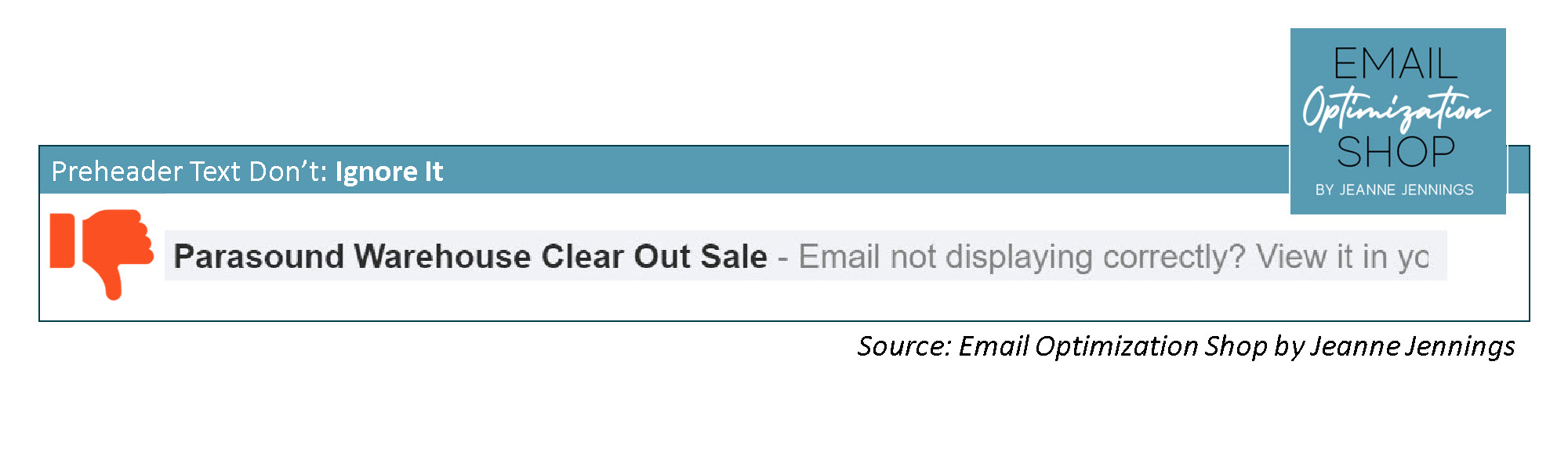
You could skip it—and let your ESP default to the first line of your email. But is that the best you can do?
Letting “Click here to view online” occupy this space is like putting your 404-error page on your homepage. Don’t do it.
2. Mimic the Subject Line in your Preheader Text
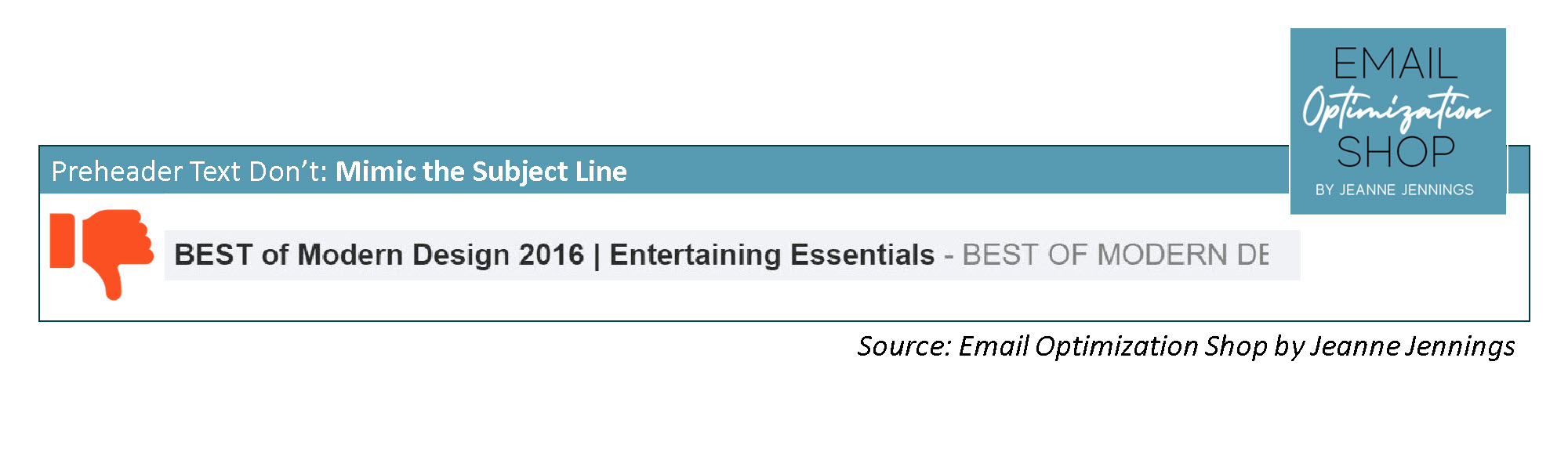
You’ll see this a lot: a verbatim or near-verbatim echo of the subject line.
Redundant. And a missed opportunity.
3. Restate the Subject Line Using Different Language
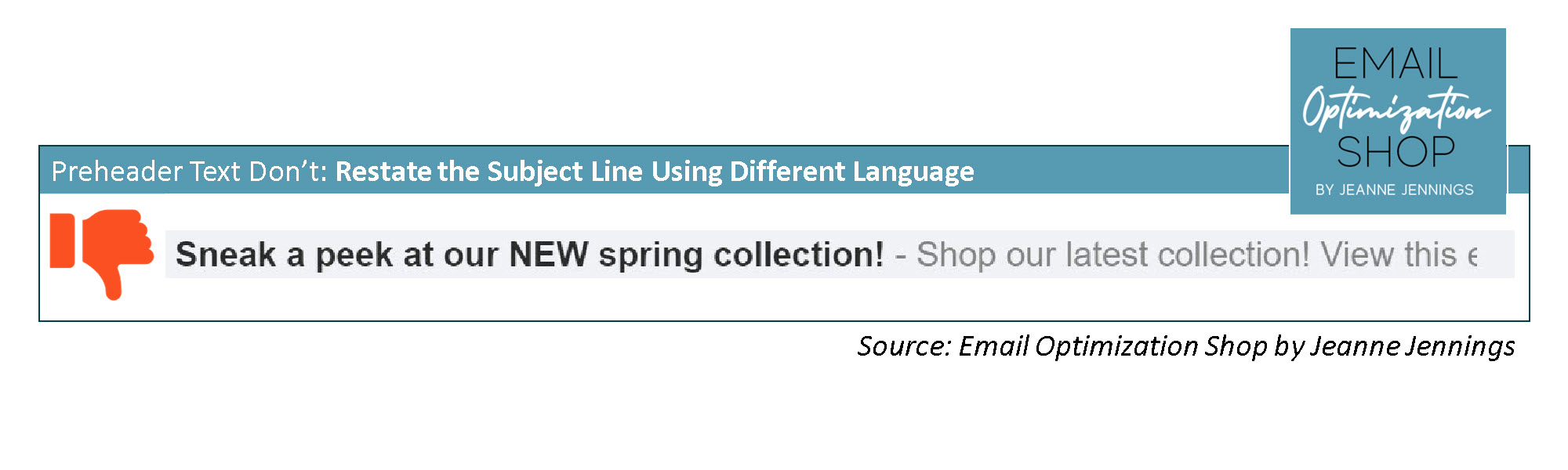
A bit better. Especially if you’re trying to include alternate terms or reinforce a concept.
But if you’re doing this because you’re not quite sure what else to say, it’s time to rethink your strategy.
4. Make Your Preheader Text Brand Specific
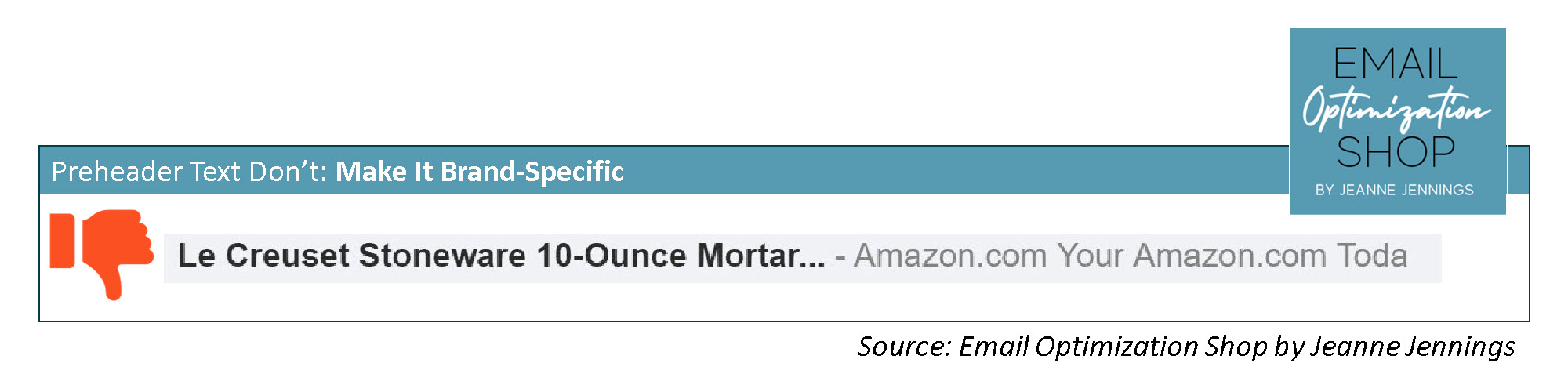
Some brands use a default preheader in every email.
This is redundant – as your brand should appear in your subject line.
Tailoring each preheader is usually more effective.
5. Make It a Continuation
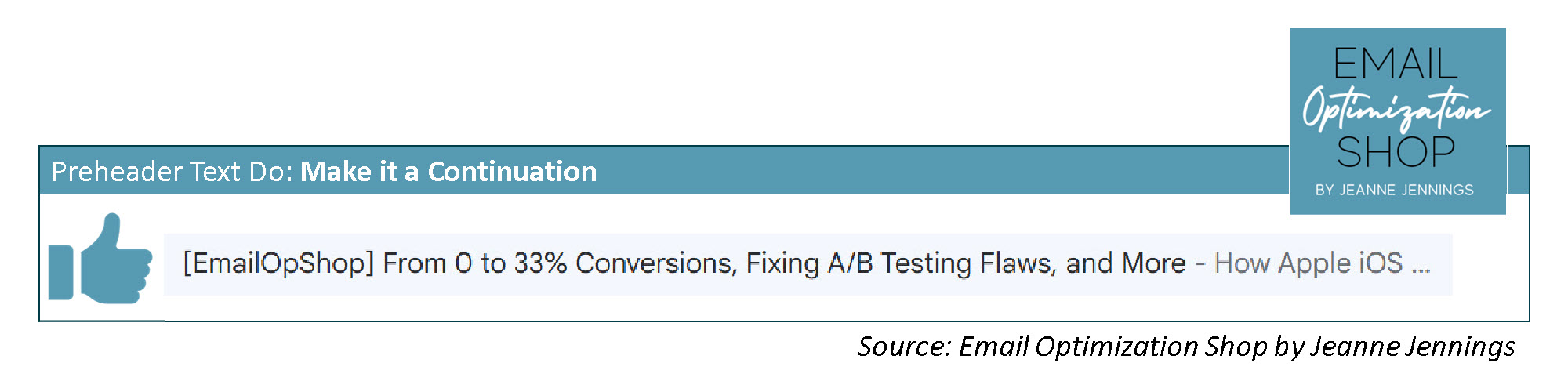
This is the approach I use for my own Email Optimization Shop newsletter.
It allows me to tease out additional points and showcase the value of the content inside, one topic at a time.
It’s a way to provide a little more detail—without just repeating yourself.
6. Use Your Preheader Text for a Secondary Message Point
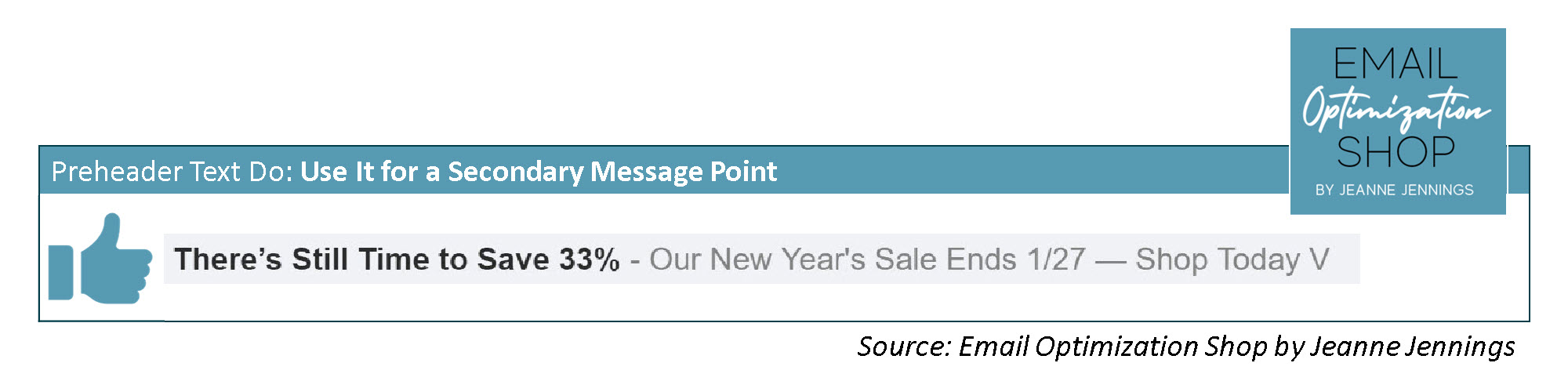
One of my favorites.
If your subject line covers the primary message, your preheader can bring in the second priority. Think urgency, audience targeting, or emotional appeal.
It’s like a one-two punch: hit them with the offer, then give them a reason to act now.
Case Study: From “Meh” to Money
Let’s break down the test that nearly doubled RPE.
Client: An online retailer targeting U.S. military veterans and their families
Goal: Drive revenue through email
The Control
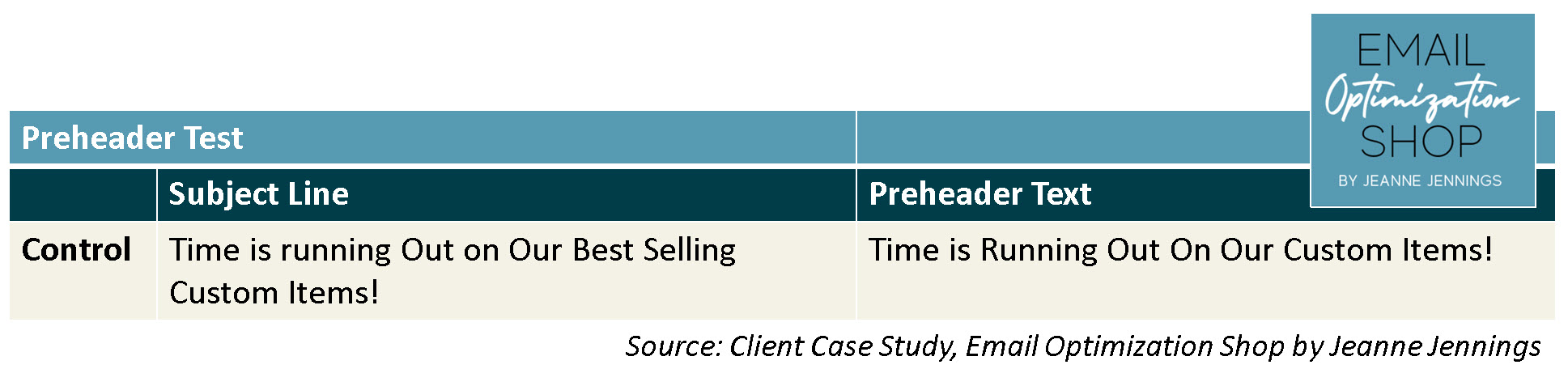
See the problem? The preheader mimics the subject line almost word for word. Model #2. Meh.
The Process
I reviewed the email and clicked through to the featured products—hats and jackets. That’s when it hit me: these were personalized items.
They didn’t just say “custom,” they let customers add a name or military branch. And with the holidays approaching, this screamed “gift-worthy.”
So I asked myself:
- What would make someone buy?
- What wording connects to their motivation?
- And how do we hook them emotionally?
Three words emerged:
- Personalized
- Gifts
- Veterans
I ran these by the client – and they were on-board with doing the test.
The Test
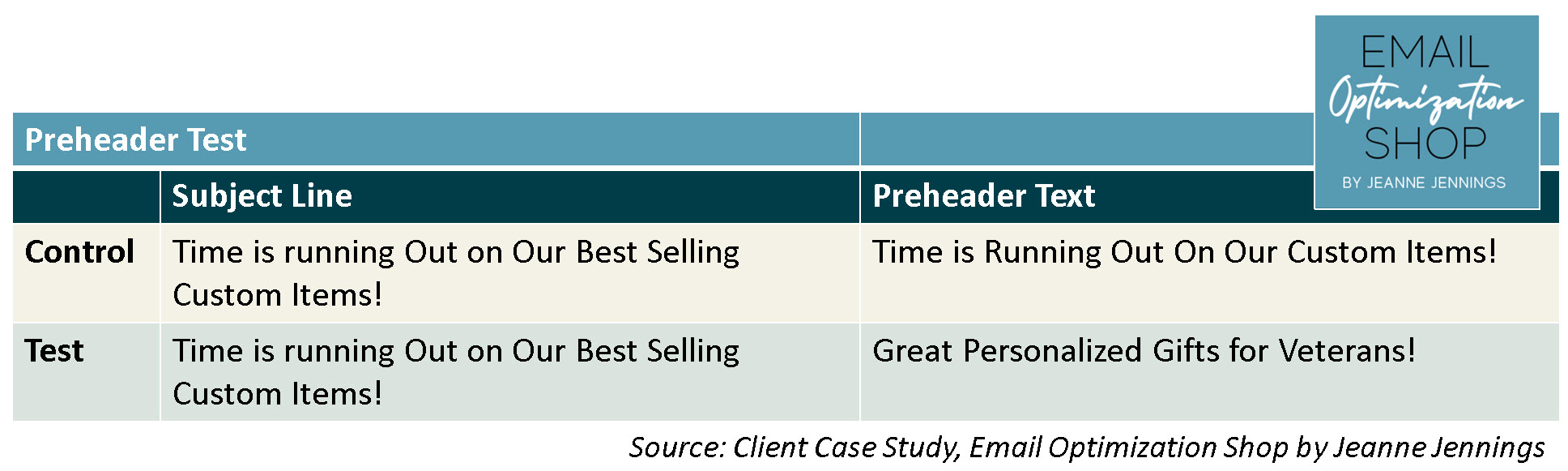
As always, we randomly split the list in two; one group got the control, the other group got the test.
The Results
When the numbers are small, I often multiply them by 1,000 and use ‘revenue-per-thousand-emails-sent (RPME) rather than revenue-per-email-sent (RPE). Same magnitude, same lift, but easier to work with.
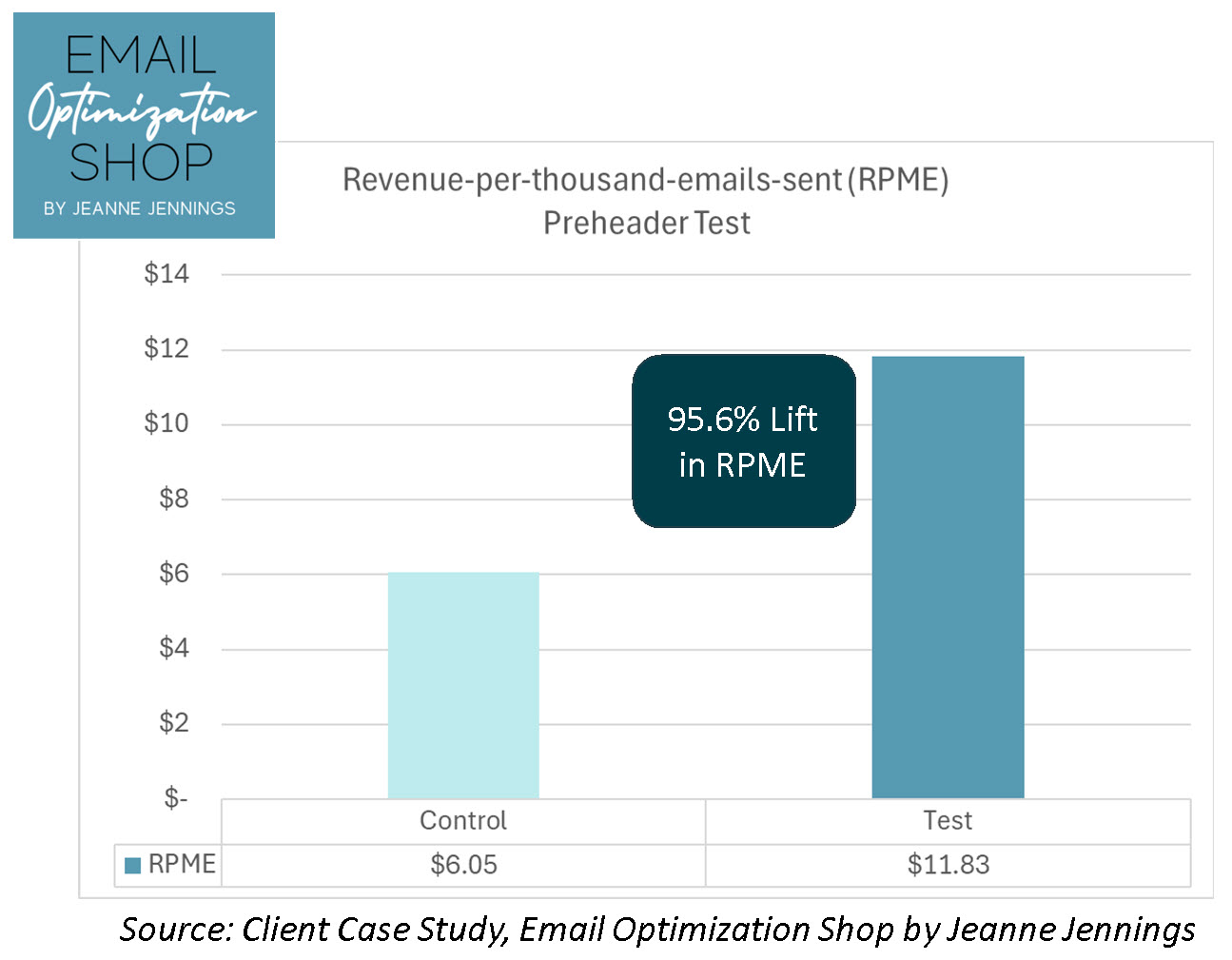
Why It Worked (And How You Can Use This)
Three words made the difference:
- Personalized beats “custom” for emotional resonance.
- Gift evokes generosity and seasonality.
- Veteran puts the image of the buyer’s loved one right in their head.
Instead of vague urgency, we tapped into value, relevance, and identity. That’s where preheaders can shine.
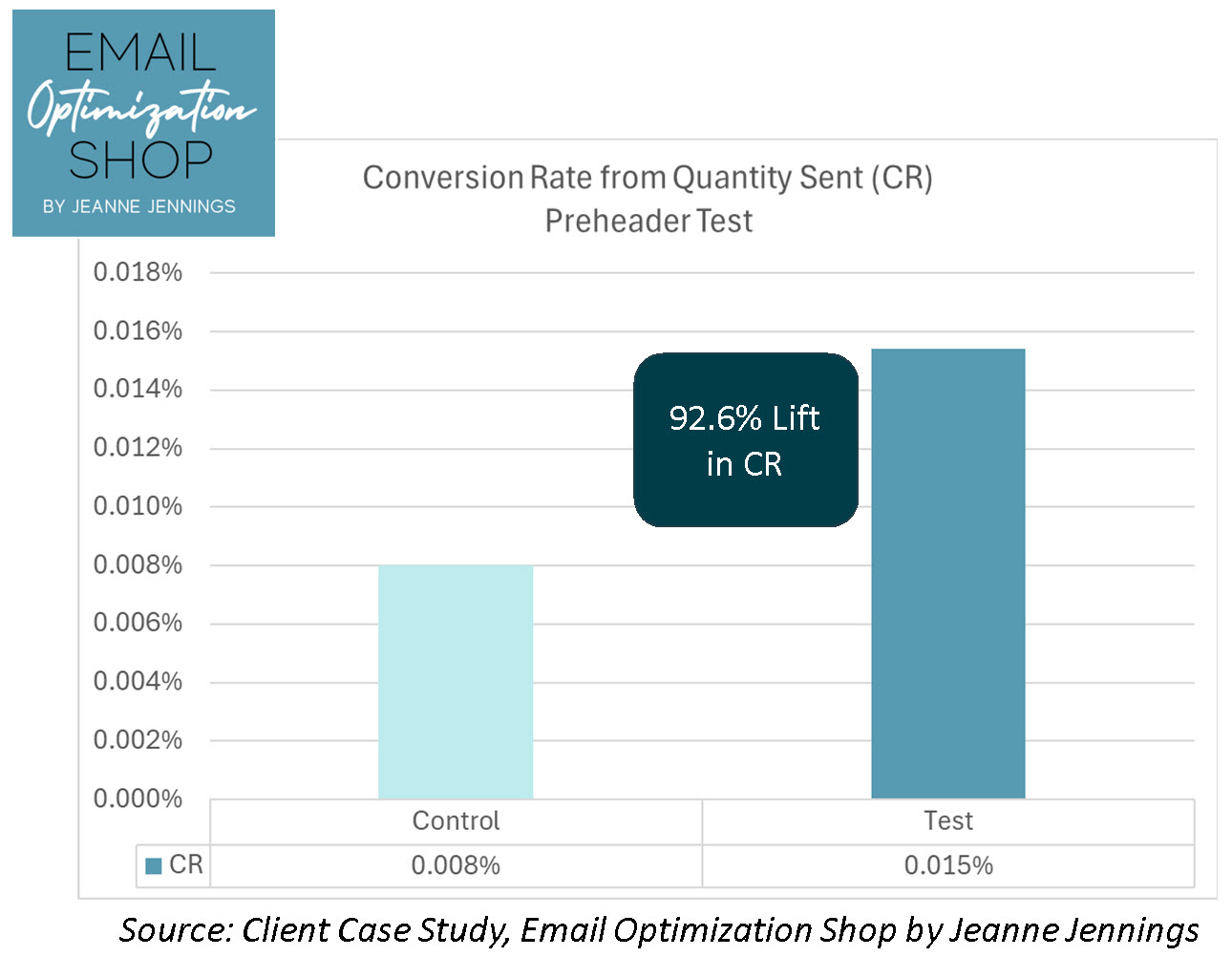
Further analysis showed that most of the lift was caused by more people buying – our conversion rate on the test was nearly 93% higher than we saw on the control.
Takeaways: Don’t Sleep on the Snippet
Before you send your next email, ask yourself:
- Am I using the preheader to reinforce or enhance the subject line?
- Is it adding value — or just echoing?
- Could it convert a casual glance into a click?
If your preheader isn’t doing any of those things, it’s time to give it some love.
Want to run your own test? Use the models above, start small, and keep a close eye on your revenue-per-email and conversion rates – opens aren’t a good KPI when your goal happens past the email.
Let me know what you find. I’d love to hear your results.
jj
Jeanne Jennings is the Founder and Chief Strategist at Email Optimization Shop, a boutique consultancy and training organization where she helps clients craft more effective and more profitable email programs.
Learn more at www.EmailOpShop.com .
Photo by Evelyn Clement on Unsplash

This post was originally published in January 2017; it was updated in July 2025.