
A case study on using smarter strategy (not more volume) to for better email performance
A few years ago, I started working with a large organization to help optimize their email marketing performance. Like a lot of enterprise-level teams, they have multiple business units, each running their own email marketing campaigns to meet their business goals.
When I started working with them they had a lot of email going out… but performance was starting to slip.
They weren’t alone. This is a pattern I see often:
- Volume starts to climb because email is cheap and easy to send
- Performance per message starts to decline
- But because “email revenue” is still up in aggregate, nobody sounds the alarm
Until someone does.
The Problem: More Email, More Revenue, Less Yield
The revenue picture initially looked rosy (we didn’t have revenue data for Year 1):
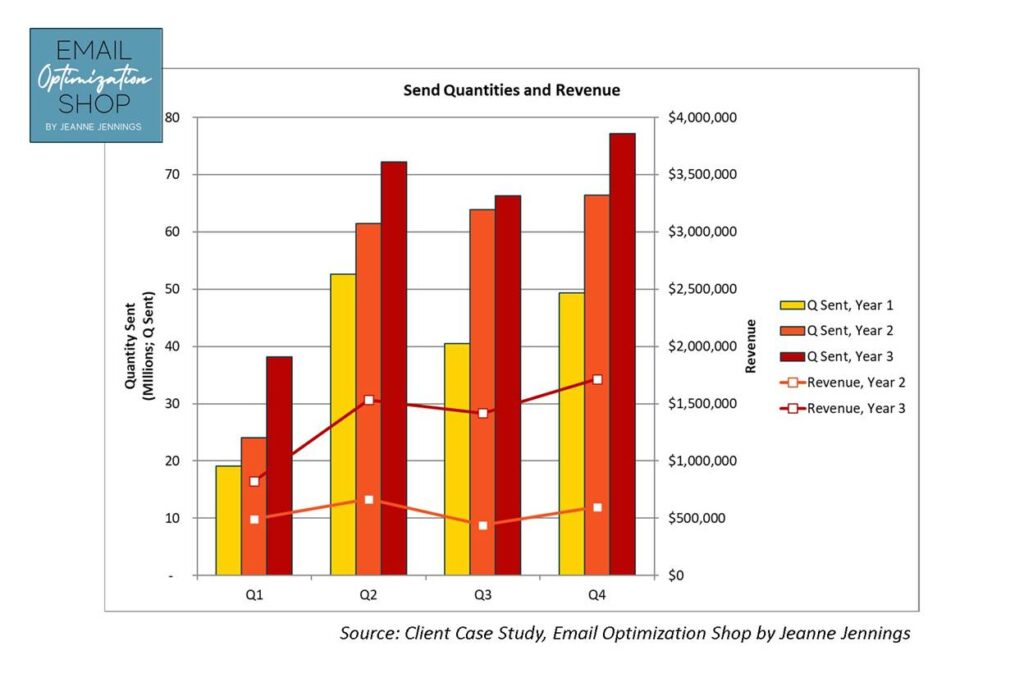
One of the first things we did was go more granular.
We looked at revenue performance per email sent; specifically, Revenue per 1,000 Emails Sent (RPME), and compared it quarter-over-quarter, year-over-year. Here’s what we saw:
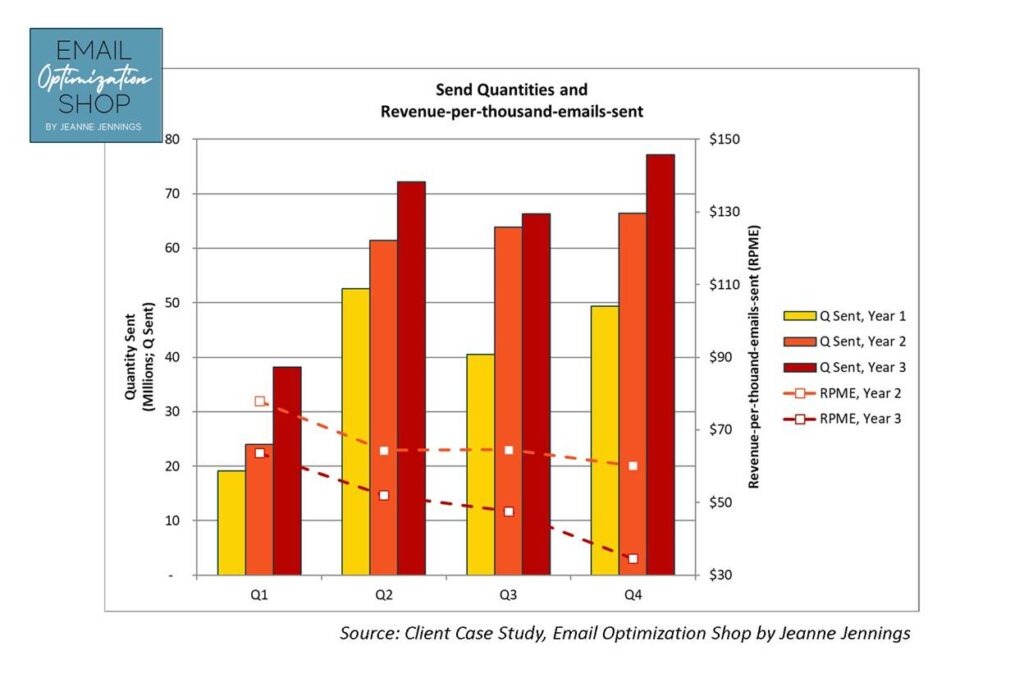
TL;DR: Send volume was going up. Revenue was going up. But RPME was going down. Significantly.
More emails were going out, but each one was working less well. That’s not a recipe for long-term success. It’s a sign of saturation.
The Solution: A Mix of Carrots and Sticks
We needed to do two things:
- Shift the culture from “send more” to “send smarter”
- Give the business units support to make the change stick
Here’s what that looked like in practice.
🥕 Carrots: Tools and Opportunities
We offered business units incentives to align with the new strategy:
- List modeling and targeting support from the digital/IT team
→ So they could hit their revenue goals without increasing volume - Strategic testing help with things like subject lines, offers, design, timing
→ To make every send more effective - A bi-weekly “All Company” email where business units could promote products or offers
→ Bonus: it didn’t count toward their send limits
The goal? Help business units perform better within tighter limits; not punish them for playing by the rules.
🪓 Sticks: Limits with Teeth
Alongside the carrots, we set clear boundaries:
- A 10% year-over-year reduction in promotional send quantities
→ Newsletters and explicitly opted-in, non-promotional messages were exempt - A new send cap: no more than 2 messages per week per subscriber
→ Previously, the limit was 1 per day; some subscribers were getting hit hard
These weren’t radical changes, but they were big enough to cause friction, which is normal when you’re changing habits at scale.
The Results
Fast forward two years:
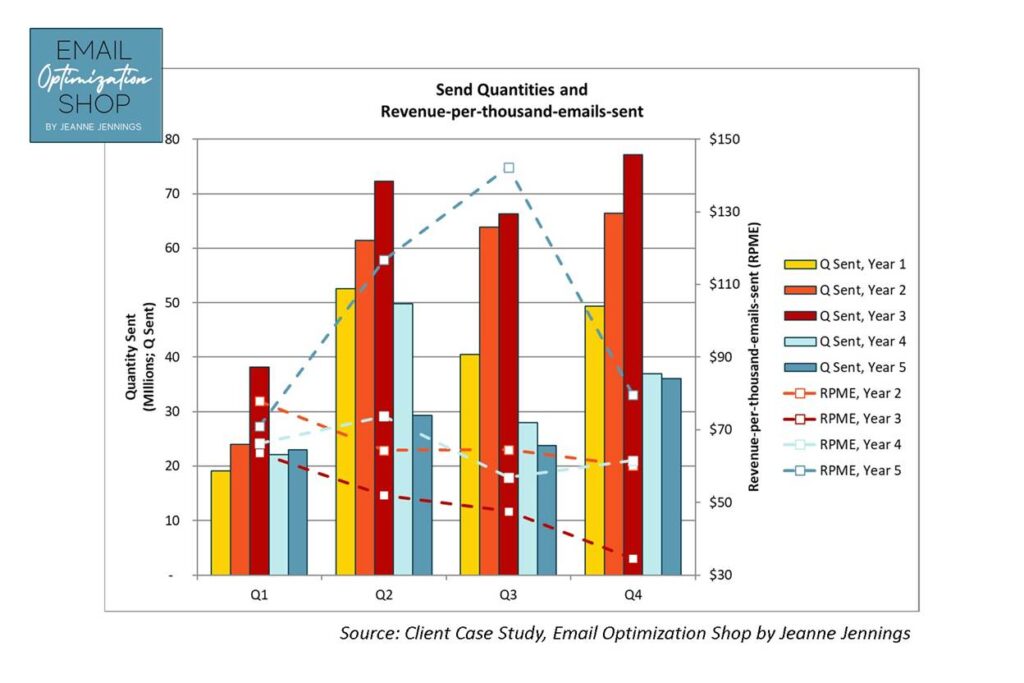
Highlights:
- RPME started climbing again (in some quarters by over 150% YOY)
- Send quantities consistently stabilized or decreased YOY
- Internal teams were sending more effective, more relevant emails
Oh, and regarding total revenue:
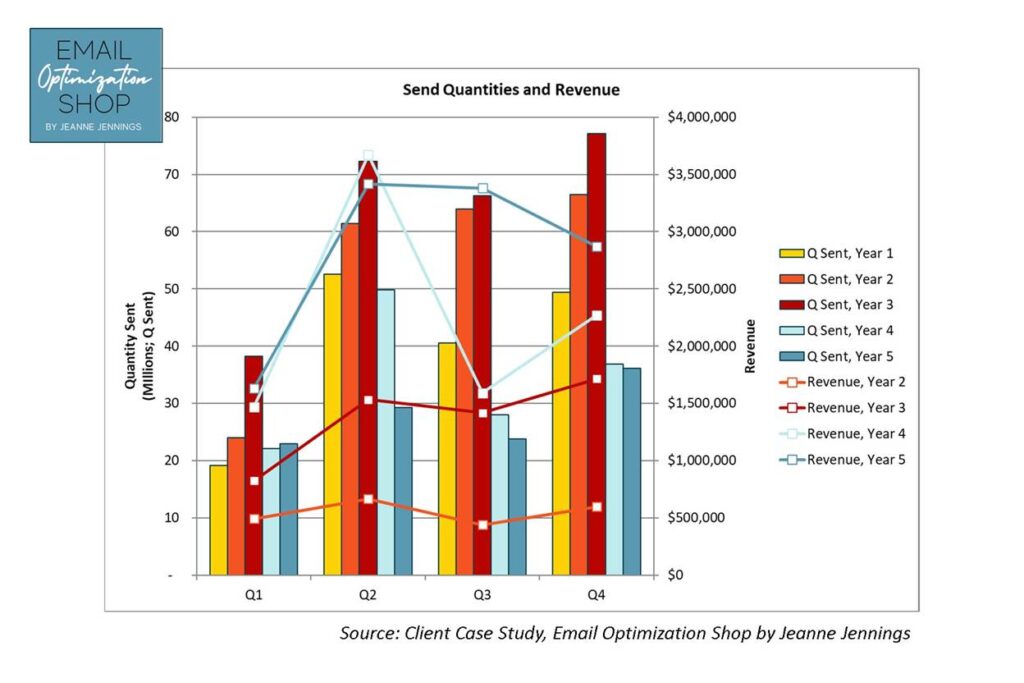
The company saw improved bottom line performance.
But most importantly, the organization had a new mindset about email:
This isn’t just a free traffic channel; it’s a strategic asset.
When you treat email marketing strategically, performance improves.
Without shouting louder.
Without burning out your list.
And without relying on outdated assumptions like “more email = more revenue”
Give it a try — and let me know how it goes!
Until next time,
jj
Jeanne Jennings is the Founder and Chief Strategist at Email Optimization Shop, a boutique consultancy and training organization where she helps clients craft more effective and more profitable email programs.
Learn more at www.EmailOpShop.com and sign up for our free newsletter to get more content like this.

Photo by Nick Fewings on Unsplash